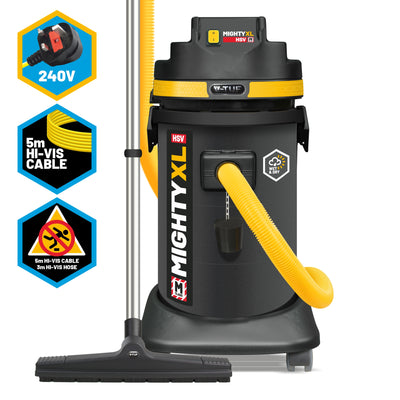
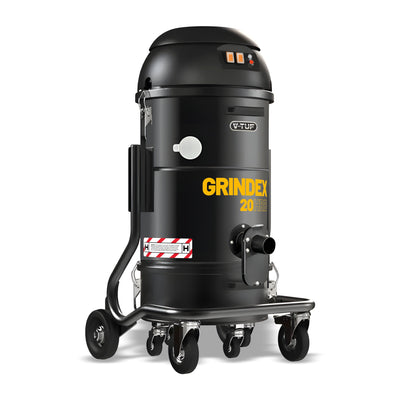
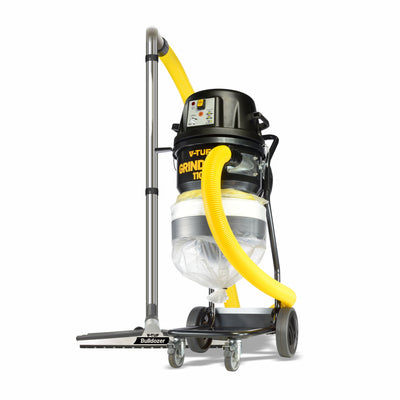
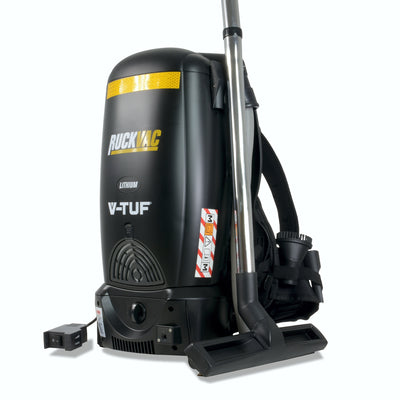
Silica Dust Control Equipment — HSE RCS Compliant
Silica Dust Control — HSE Enforcement Is Active. The WEL Is 0.1mg/m³. Dry Cutting Is Unacceptable.
The Health and Safety Executive conducted over 1,000 site inspections in 2026 specifically targeting Respirable Crystalline Silica (RCS) exposure. HSE has declared dry cutting of stone, concrete, block and brick as unacceptable practice. Contractors found dry cutting without on-tool extraction are receiving prohibition notices — work stops immediately, on the spot.
Silica is present in stone, concrete, brick, block, engineered stone, fibre cement, sandstone and slate. When these materials are cut, ground, drilled or sanded, RCS particles are released — fine enough to penetrate deep into the lungs, impossible to expel, accumulating over time. The resulting disease is silicosis — irreversible, progressive and potentially fatal. There is no cure.
The legal framework
Under COSHH 2002, silica dust is classified as a hazardous substance with a Workplace Exposure Limit (WEL) of 0.1mg/m³ as an 8-hour time-weighted average — one of the lowest WELs in UK occupational health law. Employers must implement engineering controls before considering RPE. For stone cutting operations where wet cutting is impractical, the engineering control is on-tool M-Class dust extraction connected directly to the cutting tool.
Silica content by material
- Engineered stone (kitchen worktops, bathroom surfaces) — up to 93% silica. Highest risk material in current use. Subject to specific HSE guidance and health surveillance requirements.
- Sandstone and natural stone — 70–90% silica
- Concrete and mortar — 25–50% silica
- Brick and block — 20–40% silica
- Fibre cement board — lower silica content but above WEL when dry cut
- Slate — variable, type-dependent
Why M-Class extraction is the on-tool specification
M-Class certification — minimum 99.9% filtration at 1 micron — is the COSHH engineering control standard for silica dust. The classification mark must appear on the machine. A vacuum described as suitable for fine dust, or fitted with a HEPA filter but carrying no M-Class mark, does not satisfy the standard. On-tool connection is essential — the extraction must be connected directly to the tool's dust port. A machine placed nearby with no tool connection does not control RCS at source.
What HSE inspectors look for
- COSHH assessment specific to the RCS-generating task
- Engineering controls in use at the point of observation — wet cutting or on-tool M-Class extraction
- M-Class or H-Class classification mark on the extraction machine
- Method statements naming the extraction equipment and its classification
- Health surveillance records for workers with regular silica exposure
- COSHH Regulations 2002 →
- M-Class extraction hub →
- Health rated vacuum cleaners guide →
- HSE silica crackdown 2026 — full article →
- Full COSHH compliant extraction range →
- Construction sector hub →
Telephone: 01522 787978 for silica dust control equipment specification. Contact the V-TUF trade team →