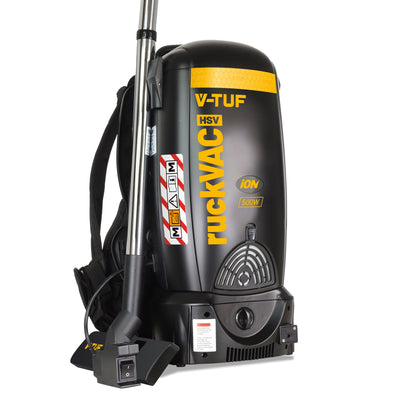
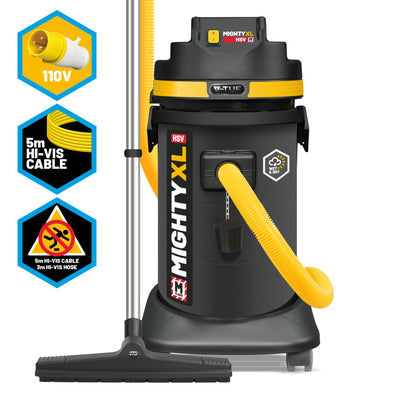
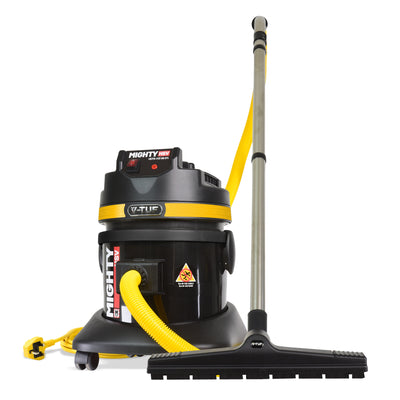
COSHH Compliant Dust Extraction Equipment
COSHH Compliant Dust Extraction — The Engineering Control the Regulations Require
The Control of Substances Hazardous to Health Regulations 2002 (COSHH) place a legal duty on employers to control worker exposure to hazardous substances — including dust. The COSHH hierarchy of controls requires engineering controls to be implemented before relying on personal protective equipment. For dust-generating tasks in construction, manufacturing and remediation environments, that engineering control is certified extraction equipment — M-Class or H-Class, depending on the hazard.
The equipment in this collection is independently tested and certified to EN 60335-2-69. The classification mark on the machine is the evidence that satisfies a COSHH assessment, a method statement and an HSE inspector. A vacuum cleaner without a classification mark is not a COSHH engineering control — regardless of what its marketing literature claims.
COSHH dust classification — which class for which hazard
- M-Class — 99.9% at 1 micron. Required for: silica dust (RCS) WEL 0.1mg/m³ — stone, concrete, block, brick cutting; hardwood dust WEL 3mg/m³ — all hardwood sanding and cutting; flour dust WEL 10mg/m³ (total) 3mg/m³ (respirable); any substance with a WEL below 1mg/m³. HSE ran over 1,000 site inspections in 2026 targeting RCS exposure.
- H-Class — 99.995% at 0.3 microns, H14 HEPA. Required for: asbestos — licensed contractor specification; mould — Hazard Group 2 biological agent under COSHH, H-Class is the only compliant engineering control for remediation vacuuming; carcinogenic dusts where M-Class is insufficient.
COSHH enforcement — what HSE is checking
HSE enforcement of COSHH dust control has intensified significantly since 2024. Inspectors attending construction sites and workshops where dust-generating tasks are being carried out are checking:
- Whether a COSHH assessment exists for the specific dust-generating task
- Whether engineering controls — extraction equipment — are in use at the point of observation
- Whether the extraction equipment carries an M-Class or H-Class classification mark
- Whether the classification is appropriate for the substance being extracted
- Whether method statements specify the extraction class being used
Prohibition notices, improvement notices and fixed penalty notices follow non-compliance. Prosecution follows repeat or serious breaches.
Workplace Exposure Limits — key substances
- Respirable Crystalline Silica (RCS) — 0.1mg/m³ TWA. Carcinogen. Causes silicosis, lung cancer. M-Class minimum.
- Hardwood dust — 3mg/m³ TWA. Carcinogen. Causes sino-nasal cancer. M-Class minimum.
- Softwood dust — 5mg/m³ TWA. Causes occupational asthma. M-Class minimum.
- Flour dust — 10mg/m³ (total), 3mg/m³ (respirable). Causes occupational asthma and baker's lung. M-Class minimum.
- Mould (biological agent) — no WEL. Hazard Group 2 biological agent. Causes allergic alveolitis, asthma, infection. H-Class required.
- Asbestos — 0.1 fibres/cm³ TWA (control limit). Causes mesothelioma, asbestosis, lung cancer. H-Class required. Licensed contractor for notifiable work.
- COSHH Regulations 2002 — full guidance →
- Health rated vacuum cleaners — why classification matters →
- M-Class extraction hub →
- H-Class extraction hub →
- HSE silica crackdown 2026 →
- Full legislation hub →
Telephone: 01522 787978 for COSHH compliant dust extraction specification. Contact the V-TUF trade team →